Time travelling on the Camp Hill Line
September saw a cast of characters from the previous century hop back on the Camp Hill Train Line to share their stories of their time in South Birmingham for Birmingham Heritage Week.
Starting at New Street Station our Heritage Week Camp Hill Off the Rails Tour began with an introduction to the building of New Street Station in 185, the forming of the train lines across the City and the competing train companies.
Laying the tracks at New Street
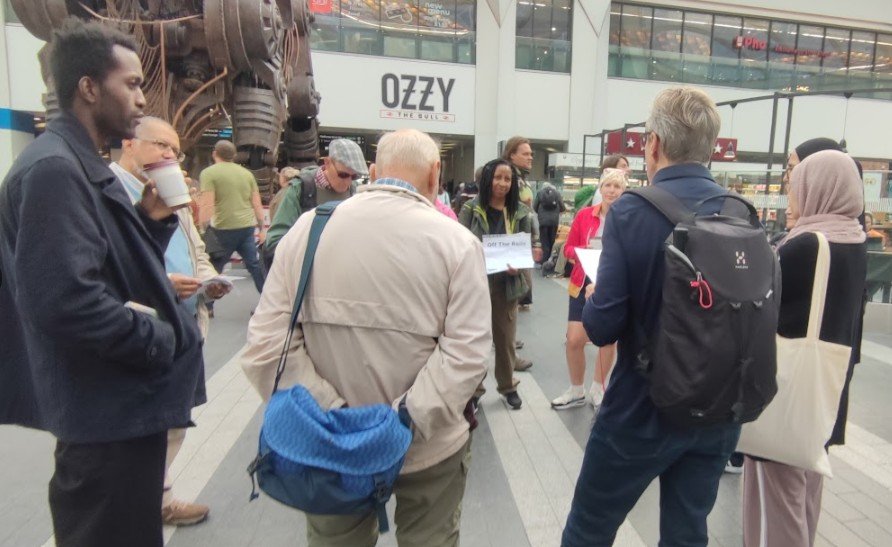
As we left New Street station we spotted Birmingham’s second station at Curzon Street, which opened in 1838, a year after the temporary terminus in Birmingham at Vauxhall in Digbeth.
Stately Feuds, Missing Stations & Wartime
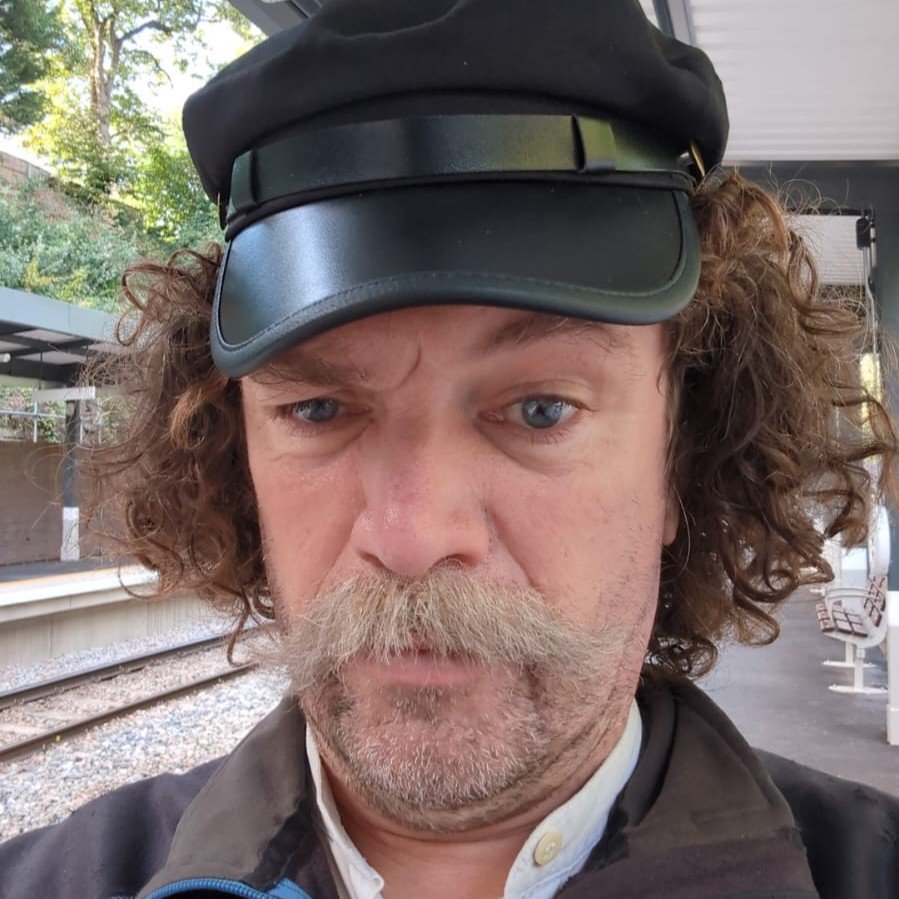
Approaching Balsall Heath, looking out for evidence of the two stations it had once had, we were joined by Mr Pepper, the Stationmaster at Brighton Road Station and Camp Hill, Balsall Heath’s first station. Mr Pepper was notorious enough to feature in The Dart magazine as the focus of some railway jokes!
We assured Mr Pepper we had tickets and sympathised with his loss of the Balsall Heath stations, and in fact the entire Camp Hill Line following second world war economies on the line, we reached Moseley Village. Here we learned about the Chamberlain and Cadbury families, political differences meaning they were not so friendly neighbours and Highbury Hall’s role in supporting injured soldiers during WW1.
Glamour and Games
Elva Pratt joined at Kings Heath station, looking for a game of Cluedo. The game was invented by her husband Anthony in Stanley Road and the board designed by Elva herself, drawings available to view at Birmingham Archives.
At Pineapple Road station a glamorous passenger hopped on, full of tales of her writing career and rather dismissive of her family’s Birmingham heritage. Barbara Cartland, whose family owned a farm on Cartland Road, was an entertaining travel companion until we reached our destination of Kings Norton station.
Suffragettes, Stories and Poetry in Kings Norton
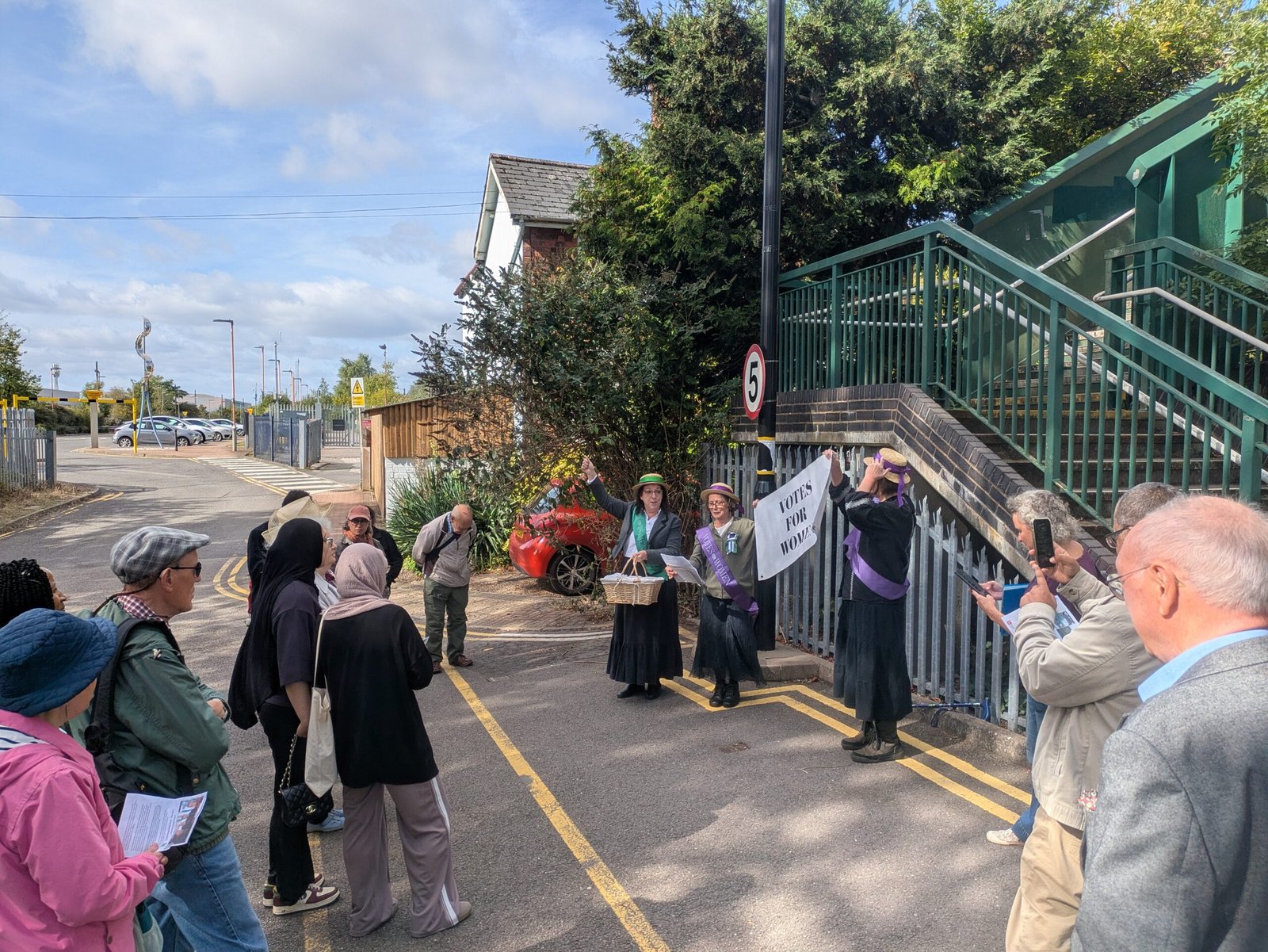
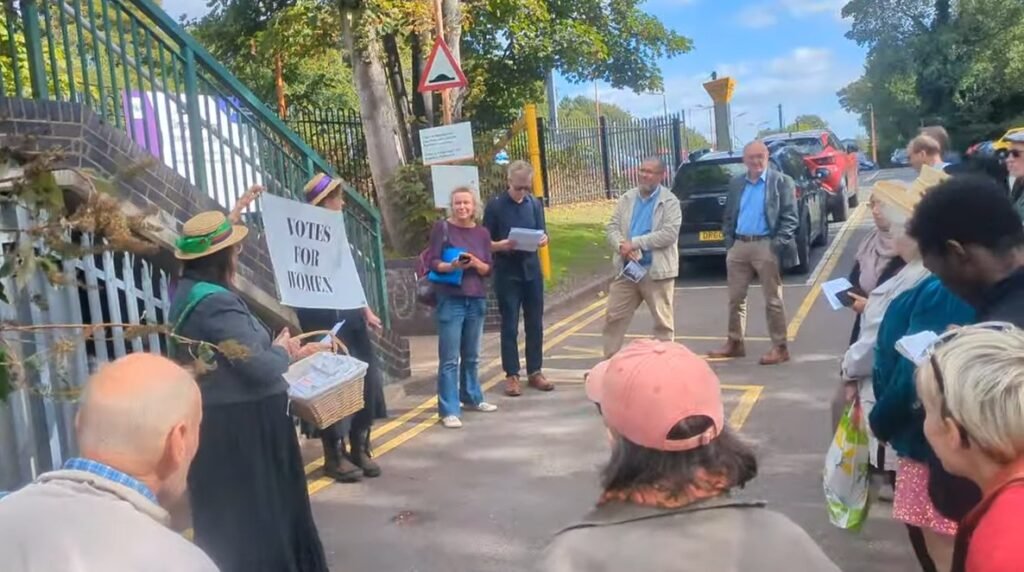
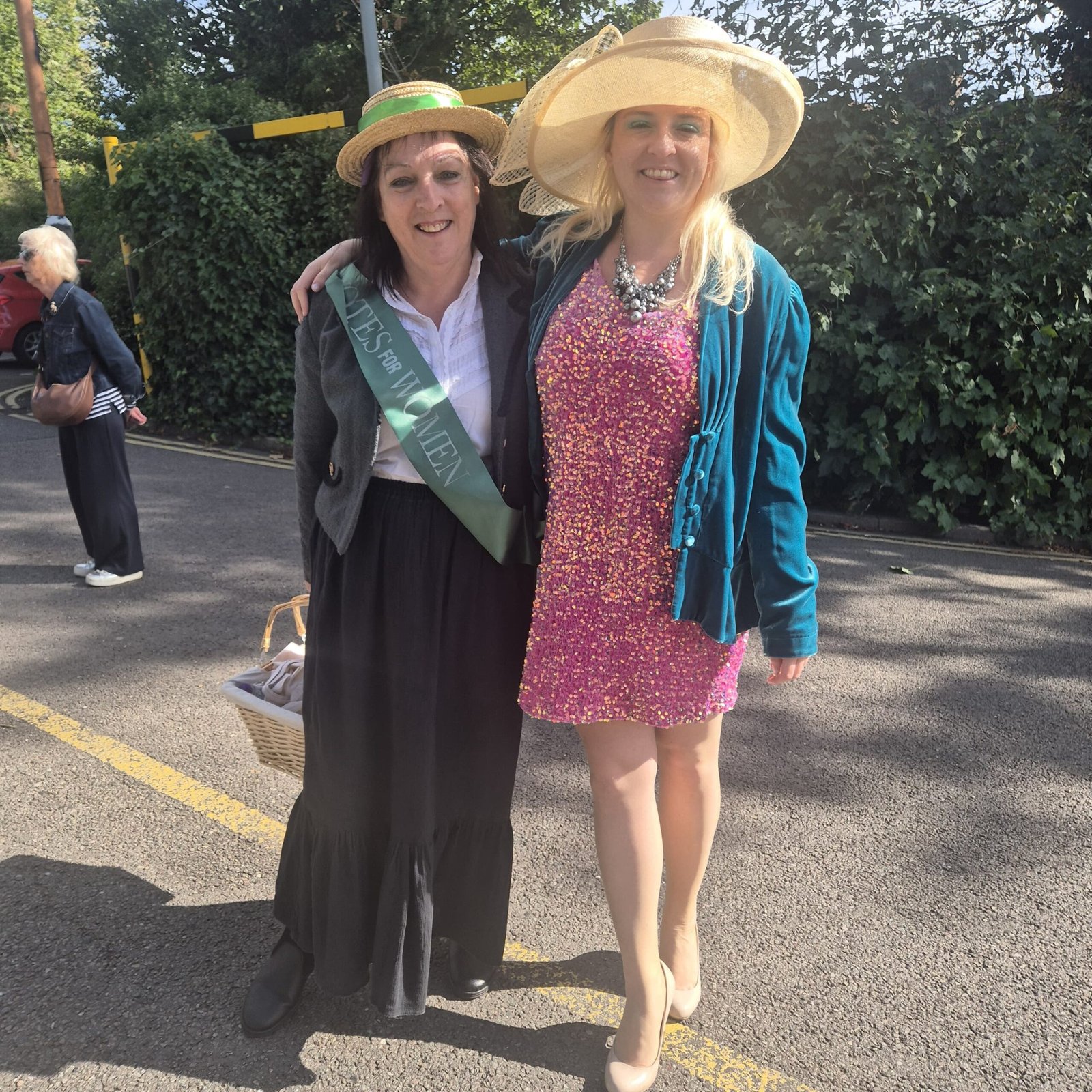
Suffragettes were massing as we got off at Kings Norton station. They described their planned weekend of action in 1916 to set fire to carriages at the station and to target the Cathedral windows with paint, a response to the force feeding of women in Winson Green Prison.
Reverend Awdry, the curate at St Nicolas church in Kings Norton church from 1940 finished our tour with a lovely Thomas the Tank Engine story and a recollection of making the stories up for his son Christopher when he was ill.
Poet and PHC member Ruben Whitter who had been with us on the journey summed it all up with a wonderful poem about our time travel on the Camp Hill Line.
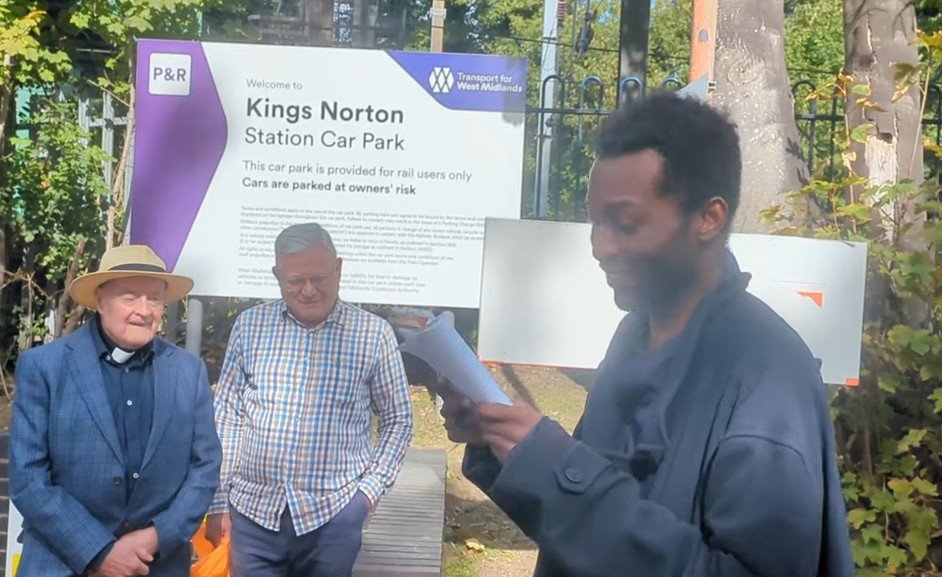
Our Heritage Week tour brought the Camp Hill Line’s history to life, in the year most of the stations themselves reopened. If you couldn’t make it this time, or if you want to join us again, keep an eye out for our next Camp Hill Line adventure – we’re looking at dates in the new year!