
Shining a Light on Birmingham’s Black History
Black History in Birmingham deserves to be celebrated alongside all People’s Heritage, and we at People’s Heritage Co-operative are working alongside Shades of Black to shine a light on some of our heroes.
Before we start, we’d like to apologise to everyone who has not been included in this – we’ve chosen people from Birmingham we think deserve recognition and, for whatever reason, do not receive the attention other fabulous people recieve: People like Adil Ray, Benjamin Zephaniah, Byron Jackson, Donnaleigh Bailey, Eve Pitts, Jude Bellingham, Khakan Qureshi, Malala Yousafzai, Moeen Ali, Mohammad Asad, Mukhtar Dar, Nazir Afzal, Paulette Wilson, Salma Bi, Winnie M Li… There are of course, countless more, and I’d encourage you to make your own list and celebrate people important to you.
Henry Gunter (1920-2007)
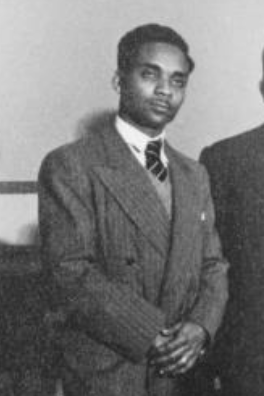
Although Henry had skills in accountancy, he was sent by the Labour Exchange to work as a mate in a brass rolling mill. He lost his job after challenging the shop steward for racist verbal abuse. He then went on to work in other factories in the city as a machine operator and a tool cutter and grinder. Alongside his day job Gunter joined the Amalgamated Engineering Union. He was the first black member of his union and the first black delegate to Birmingham Trades Union Council.
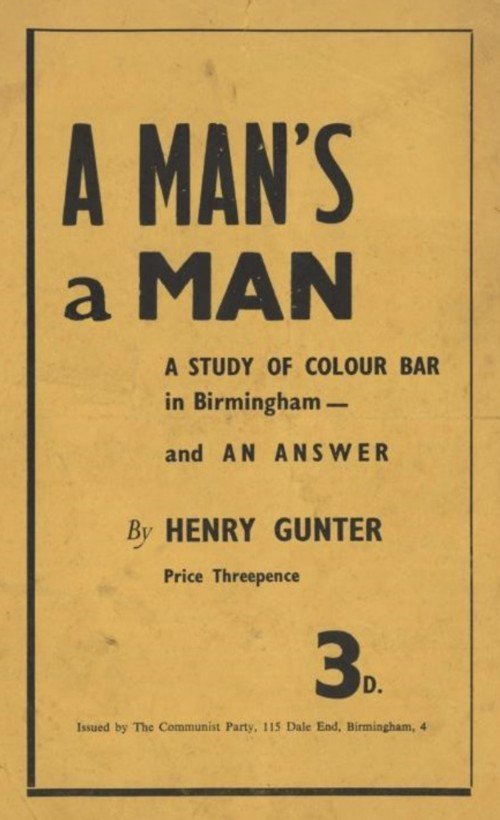
Henry helped create the Birmingham branch of the Caribbean Labour Congress, and later served as the leader of the Afro Caribbean Society, which he used to end racial segregation in the employment of Birmingham city’s bus services. He organised a protest demonstration in the city centre on 12 October, 1952, against the ‘colour bar’, and wrote the pamphlet ‘A Man’s a Man: a study of the Colour Bar in Birmingham’, which was published by the Communist Party. He discussed problems faced by black people in areas of employment, housing, hotels and social activities. He suggested five actions that anyone could take including ‘Take a stand against colour-bar and the spreading of racial prejudice wherever you find it.’
He continued to write and campaign for equality and justice, including Fairtrade and contibuted to the church magazine, the ‘Green Paper’. He also took an active interest in the preservation of materials to help with research into the history of Birmingham’s Black population in the 20th century, resulting in the deposit of these papers.
- Henry Gunter and the Campaign for Equality, 2016
- ‘A Man;s Man: A study of the Colour Bar in Birmingham‘, 1954
- Henry Gunter – wikipedia entry
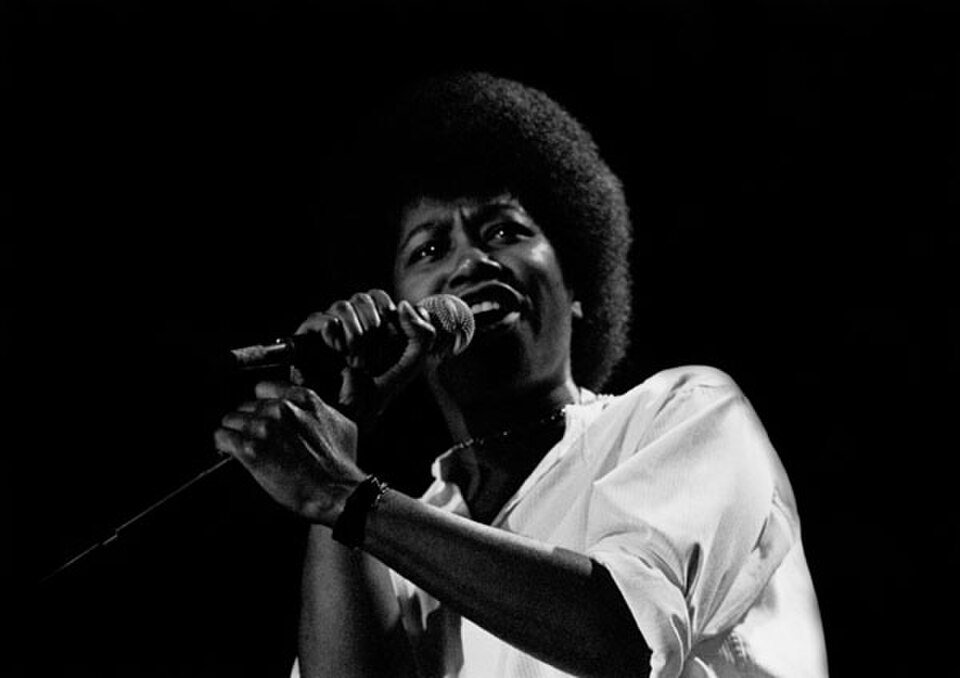
Joan Armatrading CBE

Joan began writing songs when she was 14 where she would play the piano and sing her own limericks over the top, she followed this by teaching herself how to play guitar. Two years later Armatrading performed a concert at Birmingham University with her brother where the two played Simon and Garfunkel’s “The Sound of Silence”. She then performed her own songs around the local area with a friend from school at local clubs, building a massive following with each album throughout the 1970s and 80s recieving multiple awards and continues to write and perform music internationally.
Joan Armatrading’s piece, ‘Homeland’, had its first performance at the ‘Bringing The Light’ concert at Symphony Hall on 7 December2025. The prolific singer-songwriter, who was made a CBE in the 2020 Birthday Honours, was just seven when she moved from the Caribbean island St Kitts to Birmingham. “It is a love letter to a place to which I am bonded and one I will always hold with affection and pride.”
“This is Birmingham, not simply as a backdrop, but as a living, breathing presence – an often-underrated landscape where industry and nature exist side by side in quiet beauty.”
- Joan Armatrading composes ‘love letter’ to Birmingham 2025
- Song Kick Joan Armatrading
- ‘I prefer Birdsong to chatter’ 2004
Jess Carter MBE

Jess Carter has represented England in the U19, U20, U21 and U23 youth teams. She scored on her England debut. In April 2017, after her earlier role as striker in England’s youth teams, Carter received her first call up to the senior team, and has since become a regular fixture in the England Squad.
In June 2013, Jess joined the Birmingham City Academy and one year later, at 16, she made her debut in a match against Arsenalt in the first leg of the UEFA Women’s Champion League quarter-final where she was named player of the match.
Throughout her career and during the Euro 2025 tournament England won, she was subjected to racist abuse, prompting police involvement.
- Jess Carter, England Football Squad 2026
- Debut delight for Jess Carter 2013
- England call in police over racist abuse of Carter 2026
Eunice McGhie-Belgrave MBE
Dr. Vanley Burke
Kasim Ali
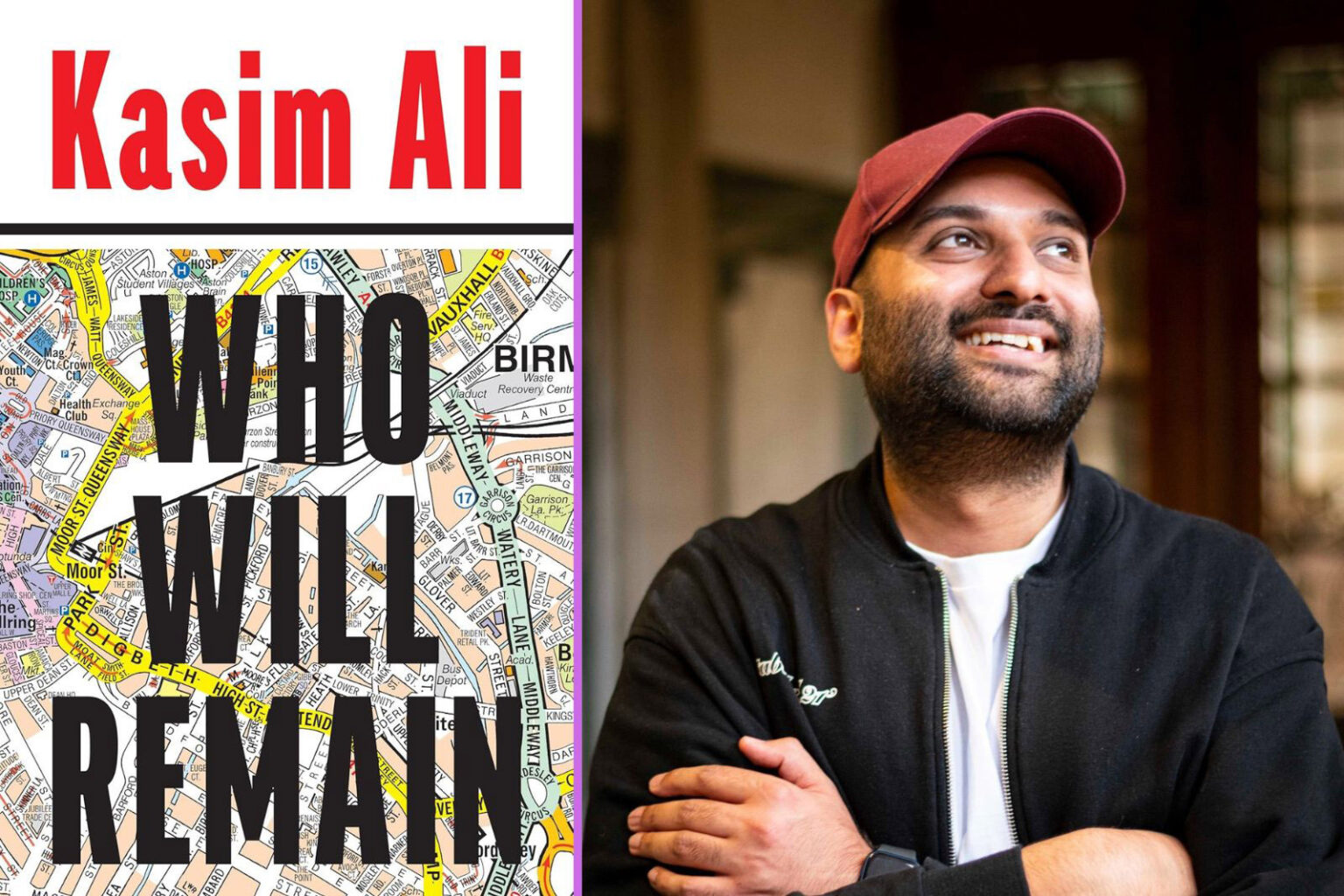
Kasim Ali’s first novel, ‘Good Intentions’, focuses on a young man hiding an interracial relationship from his parents, unable to choose between familial obligation and the future he truly wants. It also explores shame, mental health and anti-Black prejudice within the UK Pakistani community.
Ali’s new novel, Who Will Remain, is just as bold, telling the story of 20-year-old Amir, a Pakistani Muslim man from Birmingham, whose cousin is stabbed to death at the start of the narrative.
“I really hope that some people from Alum Rock read it. Young men, young South Asian Muslim men, especially, including my younger brother. I want to show them that literature is a space for them too. I’m not saying that I’m the messiah for South Asian Muslim men, but I have an opportunity here to provide them with a space that was not provided to me when I was younger. I want to say: “Maybe this is something you want to do. Maybe this is something you could do.”
Darshan Kaur
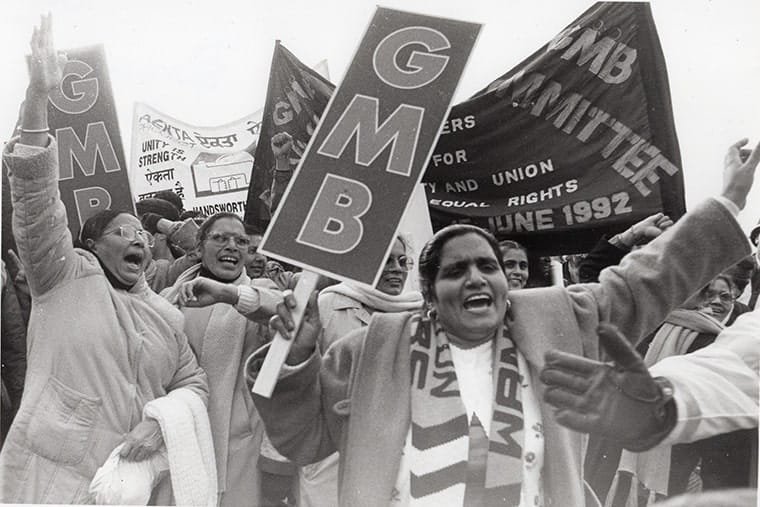
Darshan came to the UK in 1967 to come to the UK and led the Burnsall Strike in 1992, when initially 19 mostly South Asian women downed tools at Burnsall metal finishing company, Smethwick, after being forced to work 56 hour weeks, compulsory overtime, regular racist and sexist abuse and refusal to recognise trade-union membership.
On International Human Rights Day, she and the 26 Burnsall strikers received the 1993 Martin Ennalls Civil Liberties Award from the human rights group Liberty. The judges felt that the Burnsall women, who eventually lost the strike, were the people who had ‘most strongly upheld the struggle for civil liberties in the face of considerable obstacles’.
- Punjabi, poor and mad as hell: A group of Asian woen took on their bosses, 1993
- The Burnsall Strike when asian women fought for change, 2022
- Burnsall Strike – a glimpse of the future
- In the wake of remembering: Memories of the 1992 Burnsall Strike 2025
Naseem Akhtar BEM
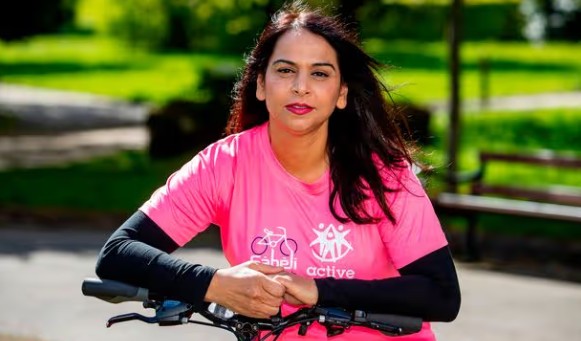
Naseem is the founder and project manager of Sähëlï Hub, which she started in 1998 specifically for women who wanted to engage in physical activities and take part in sports that were run by women. A major focus of Naseem’s vision is to normalise taking part in physical activity and sport for women that belong to marginalised communities, who often discouraged from taking part. Today, the Saheli Hub stands as a testament to what happens when you stop telling a community what they need and start listening to what they want. Naseem’s ‘radical’ ideas – that women from all backgrounds deserve to take up space, ride bikes, and prioritize their health – have helped build a bridge to a healthier future for women and men.
“I learned the really valuable lesson that you have to bring people with you, and you have to listen to everybody in the room, understand them, and work together to plan the best group action instead of just being an activist who thinks they can do it on their own.”
From a girl who was once ‘walked to her friend’s house by her brothers for safety,’ Naseem has been walking, running and biking with an entire community in Balsall Heath and across Birmingham.
- A tale of two cities 2026
- Saheli Hub
- Naseem Akhtar, threads of activism
- ‘To me anti racism means its about seeing everyone as your equal’
Eunice McGhie-Belgrave MBE
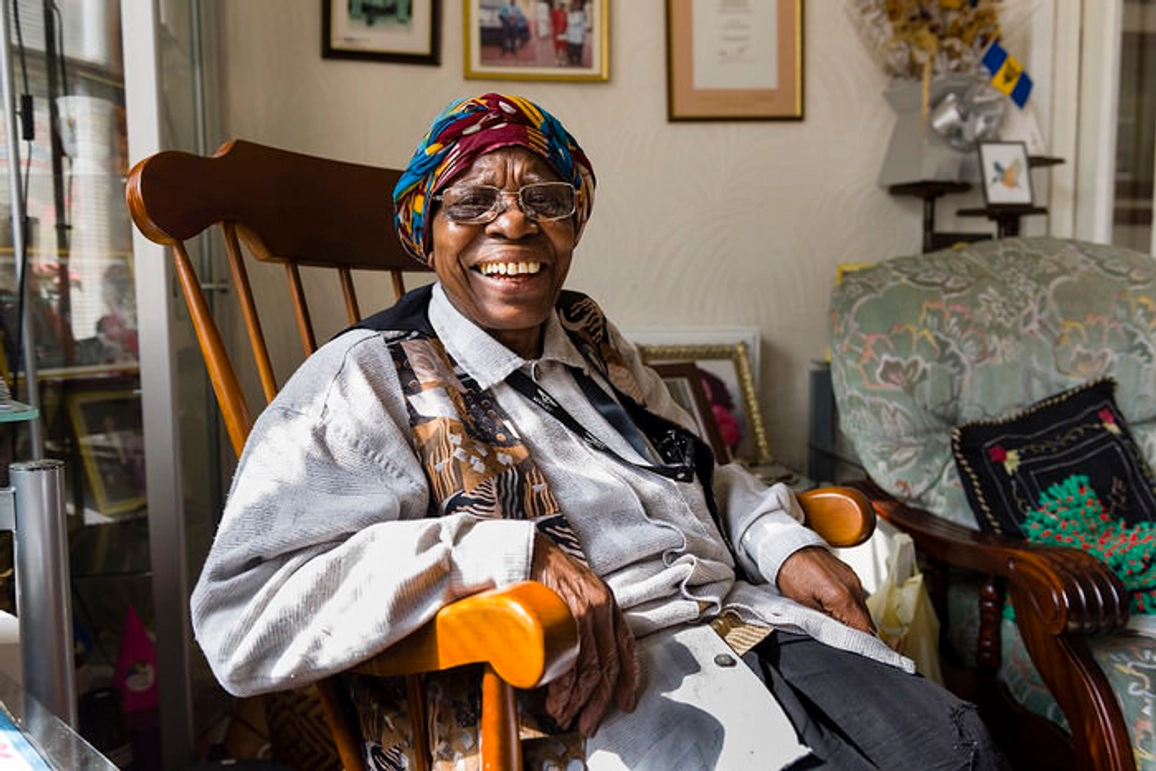
Mrs Eunice McGhie-Belgrave MBE was born in Jamaica, in 1934. She emigrated to England from Jamaica with her family as a young woman in her early 20s, in February 1957. She lived in Handsworth with her family until 1993 and now lives in Stechford.
Eunice experienced many challenges including racial intolerance. She worked as a nurse and later in the Probation Service, but she was also an entrepreneur, running domestic assistance, tailoring, and catering businesses.
Following the ‘Handsworth Riots’ in 1985, Eunice and four other local women founded a charitable community organisation called ‘Shades of Black’, with the intention to ‘reconcile, reassure and rebuild the community’.
In 2001, Eunice was awarded an MBE for her charitable work and has won numerous other awards. In 2026, aged 93, she continues working and will celebrate her birthday with Woodcraft Folk locally, and discussing ‘local heroes’ with them as part of Black History Month.
- Eunice McGhie-Belgrave MBE
- Shades of Black
- Windrush: Birmingham charity founder speaks of early years in UK
Remarkable lives
All remarkable lives, from Henry Gunter’s tireless fight against the Colour bar on Birmingham’s buses, to Joan Armatrading’s love letters to the city, Jess Carter’s triumphs on the pitch, Naseem Akhtar’s success as more women take to the pitch, Kasim Ali’s groundbreaking literary voice, Darshan Kaur’s fearless stand at Burnsall, and Eunice McGhie-Belgrave’s decades of unbroken community devotion. They are what our city’s present and future are built on.
History is what we make it, in clubs, on football pitches, through community gardens, and across union picket lines right here in Birmingham. At People’s Heritage Co-operative, working alongside Shades of Black, our mission goes beyond recording these stories. We want to make sure they are woven permanently into the collective memory of our city, celebrated in the shared heritage.
Now, the pen is in your hands
Who are the local heroes, quiet champions, or history-makers in your neighborhood who deserve to have their names remembered? We invite you to create your own list, share their stories, and help us keep shining a light on the incredible people who make Birmingham what it is today.
To learn more about our ongoing heritage projects or to share your own community stories, explore People’s Heritage Co-operative and Shades of Black.